09One Piece Card Game

How to play the One Piece Card Game

The One Piece Card Game is Bandai's two-player trading card game. Each player leads with a single Leader card, fields Characters and spends DON!! cards as a resource to bring the opposing Leader's Life down to zero. This guide follows the official Rule Manual and Comprehensive Rules (version 1.2.1). Where a card's text contradicts the rules, the card text wins.

Quick start

  1. Bring 1 Leader, a 50-card deck that only uses your Leader's colours (no more than 4 copies of any card number) and a separate 10-card DON!! deck.
  2. Draw 5 cards, mulligan the whole hand once if you want, then place face-down Life cards equal to your Leader's Life value.
  3. Each turn runs Refresh, Draw, DON!!, Main and End. The first player skips the draw and gets 1 DON!! on turn 1, and neither player can attack on their first turn.
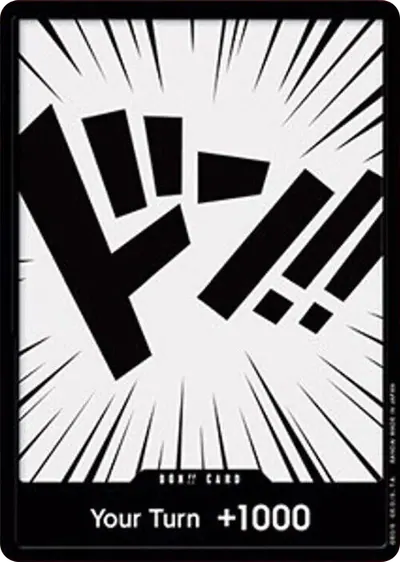
  4. Rest DON!! cards to pay costs, or attach them to your Leader and Characters for +1,000 power each during your turn.
  5. Attack the Leader or a rested Character; the defender can Block and Counter. Win by landing a hit when the opposing Leader has 0 Life, or when your opponent's deck runs out.
Anatomy

How to read a card

These are the parts of a card you will check during play.

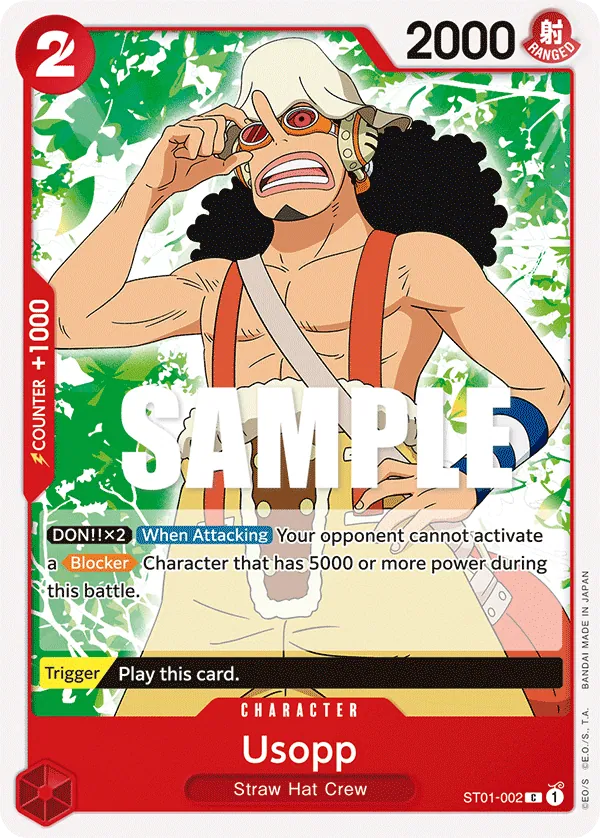
Usopp ST01-002
  1. Cost (top-left number)

    How many active DON!! you rest to play the card. Leaders have no cost.

  2. Power

    Strength in battle. Only Leaders and Characters have it.

  3. Attribute

    Slash, Strike, Ranged, Special or Wisdom. Some effects refer to it.

  4. Counter (along the left edge of many Characters)

    The power, usually +1,000 or +2,000, the card adds when you trash it from your hand during your opponent's attack.

  5. Effect and Trigger

    The card's abilities and keywords, plus a [Trigger] effect on some cards that can be used when the card is revealed from your Life.

  6. Colour

    Red, green, blue, purple, black or yellow. Multicolour cards count as every colour they show.

  7. Type

    The crew or affiliation under the card name, such as Straw Hat Crew or Navy. Many effects look for a specific type.

  8. Card number and block icon

    The card number sets the 4-copy limit; the block icon in the lower-right corner decides tournament legality.

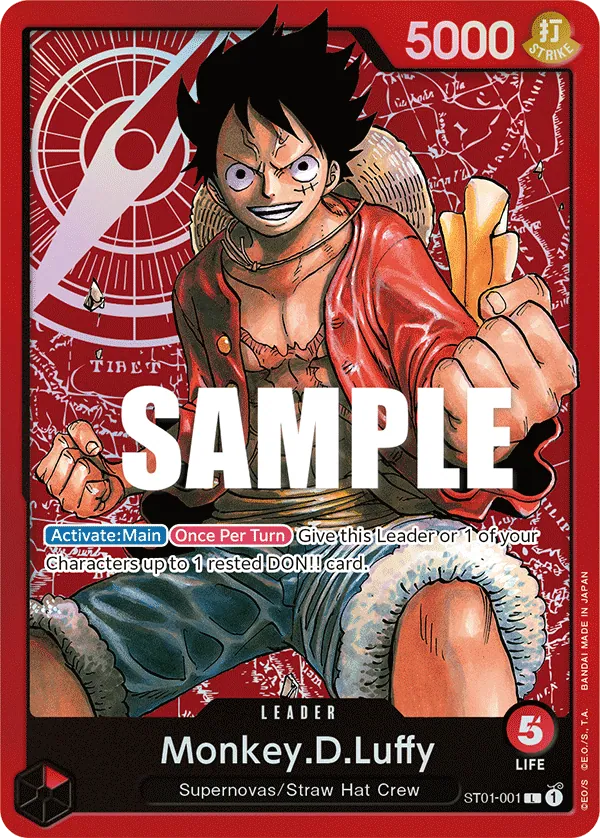
Leader, Life and DON!!

Card types

There are five card categories. Only Characters, Events and Stages go into your 50-card deck; a pre-built Starter Deck includes everything you need for a first game.

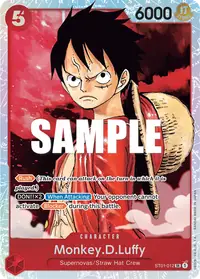
  • Character

    Characters are your crew. You pay their cost to play them, and they attack, block and carry most of your effects. You can have up to five in play. A Character cannot attack on the turn it is played unless it has [Rush].

    ExampleMonkey.D.Luffy · ST01-012

  • Event

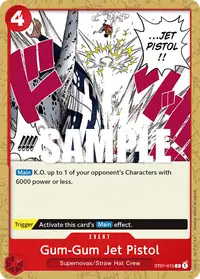
    Events are one-off effects: pay the cost, trash the card and resolve it. [Main] Events are used in your Main Phase; [Counter] Events are used when your opponent attacks.

    ExampleGum-Gum Jet Pistol · ST01-015

  • Stage

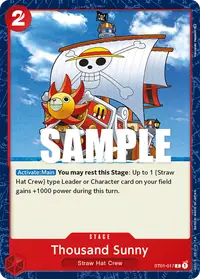
    Stages are places and ships with ongoing or activated effects. You can only have one in play; playing a new Stage trashes the old one.

    ExampleThousand Sunny · ST01-017

The table

Setting up a game

Both players complete each step before moving on to the next.

  1. Shuffle your 50-card deck and place it face down. Place your DON!! deck in its own area.
  2. Place your Leader face up in the Leader area.
  3. Use rock-paper-scissors, or another random method, to decide who chooses to go first or second.
  4. Draw 5 cards.
  5. Mulligan: starting with the first player, each player may once return their entire hand to the deck, reshuffle and draw 5 new cards. You cannot keep part of the hand.
  6. Without looking at them, place cards from the top of your deck face down in your Life area, as many as your Leader's Life value.
  7. The first player begins their turn.

The play area

  • Characters
  • Life
  • Leader
  • Stage
  • Deck
  • DON!! deck
  • Cost area
  • Trash
FieldActiveRested

Your side of the table has a Leader area, a Character area (up to 5 cards), a Stage area (1 card), a cost area for DON!!, your DON!! deck, your deck, your trash and your Life. The Leader, Character, Stage and cost areas together are called the field.

Cards on the field are either active (upright) or rested (turned sideways). Attacking, blocking and paying costs rest cards; your Refresh Phase sets them active again.

Phases

Turn structure

Every turn has five phases in a fixed order. The first player's opening turn is restricted to offset the advantage of going first.

  1. Phase 1RefreshTake back attached DON!! and set all your cards as active.
  2. Phase 2DrawDraw 1 card (the first player skips this on their first turn).
  3. Phase 3DON!!Add 2 DON!! to your cost area (only 1 on the first player's first turn).
  4. Phase 4MainPlay cards, use effects, give DON!! and attack, in any order.
  5. Phase 5EndEnd-of-turn effects resolve and play passes to your opponent.
The five phases in detail

1. Refresh Phase

Return every DON!! attached to your Leader and Characters to your cost area, then set all your rested cards as active.

2. Draw Phase

Draw 1 card. The player going first does not draw on their first turn.

3. DON!! Phase

Place 2 DON!! from your DON!! deck face up and active in your cost area; the first player places only 1 on their first turn. Once the DON!! deck is empty you add none, so the second player has all 10 on their fifth turn and the first player on their sixth.

4. Main Phase

This is where the game happens. You can take these actions in any order, as many times as you are able.

  • Play a Character or a Stage, or activate a [Main] Event, by resting active DON!! equal to its cost.
  • Use [Activate: Main] effects on your Leader, Characters or Stage.
  • Give DON!!: attach active DON!! from your cost area to your Leader or a Character, one at a time. Each adds +1,000 power during your turn.
  • Battle: attack with your Leader or a Character.

Attached DON!! and a full board

Attached DON!! stay on that card until your next Refresh Phase and cannot be moved. If the card leaves the field, its DON!! return to your cost area rested.

With five Characters already in play, you can still play a new one by trashing one of yours. That is not a K.O., so [On K.O.] effects do not activate.

5. End Phase

End-of-turn effects resolve, effects that last during this turn expire, and play passes to your opponent.

Battle

Attacking and battles

A battle has four steps followed by the end of the battle. Knowing the defender's options is the key to reading the game.

  1. Step 1AttackRest your attacker and pick a target: the opposing Leader or a rested Character.
  2. Step 2BlockThe defender may redirect the attack to a Character with [Blocker].
  3. Step 3CounterThe defender trashes Counter cards from their hand to add power.
  4. Step 4DamageEqual or higher power wins: the Character is K.O.'d or the Leader takes 1 damage.
  5. Step 5Life and TriggerEach damage moves the top Life card to hand, or its [Trigger] is used instead.
Each battle step in detail

Attack Step

Rest your active Leader or an active Character to declare an attack, then choose a target: your opponent's Leader or one of their rested Characters. Active Characters cannot be attacked. [When Attacking] effects activate now.

Block Step

The defender may rest one active Character with [Blocker] to make it the new target. Only one Blocker can be used per battle.

Counter Step

The defender may, as often as they like, trash Character cards with a Counter value from their hand to add that power to their Leader or a Character for this battle, at no cost. They can also pay for Event cards with [Counter].

Damage Step

Compare power. If the attacker's power is equal to or higher than the target's, the attacker wins: ties go to the attacker. A losing Character is K.O.'d and goes to the trash; a losing Leader takes 1 damage. If the attacker's power is lower, nothing happens.

Taking damage and Triggers

For each point of damage, the defending player adds the top card of their Life to their hand. If it has a [Trigger], they may reveal it and use that effect instead, after which the card goes to the trash unless the effect says otherwise. This is the hidden cost of attacking: every Life card your opponent loses becomes a card in their hand, often a Counter.

End of the battle

Effects that last during this battle end, and you return to your Main Phase to play more cards or attack again.


Victory

How to win

There are two ways to win a game.

  1. Deal damage to your opponent's Leader when they have 0 Life cards left, usually by winning a battle against it.
  2. Your opponent's deck reaches 0 cards. A player loses as soon as their deck is empty, not when they next try to draw.
Keywords

Glossary

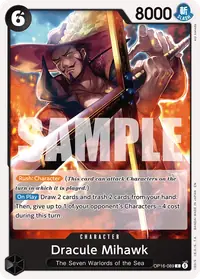
  • Rush: Character

    On the turn it is played, this Character can attack Characters, but not the Leader.

    ExampleDracule Mihawk · OP16-089

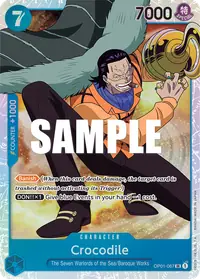
  • Banish

    Life cards lost to this card's attacks go to the trash, not the hand, and their Trigger cannot be used.

    ExampleCrocodile · OP01-067

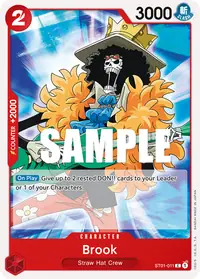
  • On Play

    Activates when the card is played. It is mandatory if it can resolve, but you may refuse to pay an optional cost.

    ExampleBrook · ST01-011

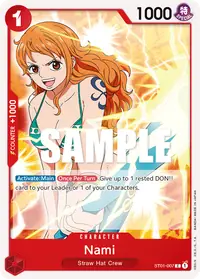
  • Activate: Main

    An effect you can use during your Main Phase, outside battle, often by paying a cost.

    ExampleNami · ST01-007

  • Counter

    On Characters, the power a card adds when trashed from hand in the Counter Step, at no cost. On Events, an effect paid with DON!! and used in the Counter Step.

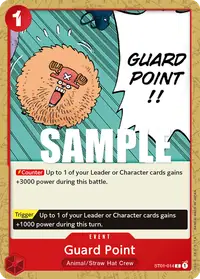
    ExampleGuard Point · ST01-014

  • Trigger

    When damage moves this card from your Life to your hand, you may reveal it and use this effect instead.

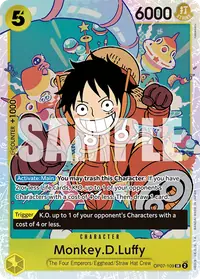
    ExampleMonkey.D.Luffy · OP07-109

  • DON!! −N

    A cost: return N DON!! from your field to your DON!! deck.

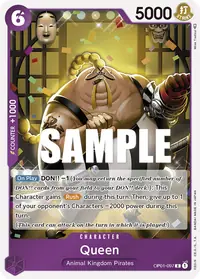
    ExampleQueen · OP01-097

  • Your Turn / Opponent's Turn

    The effect applies only during your turn, or only during your opponent's turn.

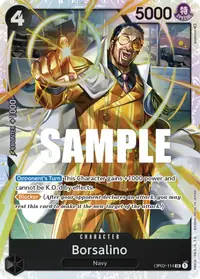
    ExampleBorsalino · OP02-114

  • Once Per Turn

    The effect can be used once per turn for each copy of the card.

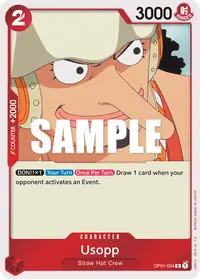
    ExampleUsopp · OP01-004

  • K.O.

    Placing a Character from the field into the trash, because it lost a battle or because of an effect.

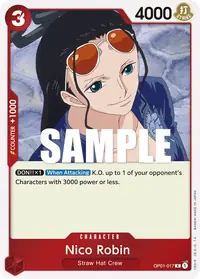
    ExampleNico Robin · OP01-017

Your deck

Deck building rules

Deck construction is short and strict. Run through this checklist before every game.

  • 1Leader
  • 50cards in the deck
  • 4copies max per card number
  • 10DON!! in a separate deck
  • Exactly 1 Leader card.
  • Exactly 50 cards in the main deck, using only Characters, Events and Stages.
  • Every colour on every card must appear on your Leader. A red and green Leader can use red, green and red/green cards; a mono-red Leader can only use red cards.
  • No more than 4 cards with the same card number. Parallel and alternate-art versions share the number, so they count towards the same limit.
  • Exactly 10 DON!! cards in a separate DON!! deck.
  • For organised play, check the current format and the official banned and restricted list.

Formats and legal cards

Since 1 April 2026, official events use two regulations. Standard only allows recent blocks, shown by the block number on each card; from April 2026 to March 2027 that means blocks 2 to 5. Extra allows every card released so far, except banned cards. A few Leaders change the deck-building rules with their own text, and the card wins.

Example

Step-by-step first turn example

Player A goes first and Player B goes second; both Leaders have 5,000 power and 5 Life.

See all 9 steps
  1. Setup: both players draw 5 cards, decide on a mulligan (A first) and place 5 Life cards face down.
  2. A, turn 1: no draw and only 1 DON!!. A rests it to play a 1-cost Character with 3,000 power. Nobody can attack on their first turn, so A ends the turn.
  3. B, turn 1: B draws, adds 2 DON!! and plays a 2-cost Character with 4,000 power and [Blocker]. B cannot attack yet either.
  4. A, turn 2: Refresh sets A's DON!! active again. A draws and adds 2 DON!!, for 3 in total.
  5. A's Main Phase: a new Character could not attack this turn, so A gives 1 DON!! to the Leader (6,000 power) and 2 to the Character from turn 1 (5,000 power).
  6. First attack: A's Leader attacks B's Leader. B's Character is active, so it cannot be targeted. B could block, but the 4,000-power Blocker would be K.O.'d, so B declines.
  7. Counter Step: +1,000 would only make it 6,000 against 6,000, and ties go to the attacker. B trashes a +2,000 Counter instead; 7,000 beats 6,000 and the attack fails.
  8. Second attack: A's Character (5,000) attacks B's Leader (5,000). B keeps the rest of the hand, so the tie means 1 damage: B adds the top Life card to hand, or uses its [Trigger] if it has one.
  9. End Phase: A ends the turn. The DON!! stay attached until A's next Refresh Phase but add no power during B's turn.

What the example shows

Attaching DON!! forces your opponent to spend cards from hand, while playing Characters builds a board for later turns. Balancing the two is the core skill of the game.

Watch out

Common beginner mistakes

  • Attacking on your first turn: neither player can battle on their first turn.
  • Targeting an active Character: only the Leader and rested Characters can be attacked.
  • Paying DON!! for Character Counters: they are free; only [Counter] Events cost DON!!.
  • Using a Trigger from your hand: [Trigger] only works when the card is revealed from your Life.
FAQ

Frequently asked questions

How many cards are in a One Piece Card Game deck?

Exactly 50, plus 1 Leader card and a separate DON!! deck of 10. That makes 61 cards in total, but only the 50-card deck is shuffled and drawn from.

How many DON!! cards do you need?

Exactly 10, kept as a separate DON!! deck. You add 2 per turn (1 on the first player's first turn), so all 10 are in play by your fifth or sixth turn.

Can you have 4 copies of the same card?

Yes. The limit is 4 cards with the same card number, and parallel or alternate-art versions count towards the same 4.

How does Counter work in the One Piece Card Game?

When you are attacked, you can trash Character cards with a Counter value from your hand to give your Leader or one of your Characters (normally the one being attacked) +1,000 or +2,000 power for that battle, at no cost, or pay for [Counter] Events. Use as many as you like, but the attacker still wins ties.

What is a Trigger?

An effect that can activate when the card leaves your Life because your Leader took damage. You may reveal it and use the effect instead of adding the card to your hand, or simply keep the card.

Can you attack on your first turn?

No. Under the official rules neither player can battle on their first turn. The first player also skips their first draw and gets only 1 DON!!.

Can you mulligan?

Yes, once. After drawing your opening 5 cards you can shuffle the whole hand back and draw 5 new ones. The first player decides first.

Is there a maximum hand size?

No. The official rules Q&A confirms there is no hand size limit, so you never discard at the end of your turn.

Sourcesen.onepiece-cardgame.com/rules/en.onepiece-cardgame.com/pdf/rule_manual.pdfen.onepiece-cardgame.com/pdf/rule_comprehensive.pdfen.onepiece-cardgame.com/pdf/qa_rules.pdfen.onepiece-cardgame.com/topics/013.phpen.onepiece-cardgame.com/pdf/rule_overview_sheet_es.pdfen.onepiece-cardgame.com/pdf/rule_overview_sheet_fr.pdffr.onepiece-cardgame.com/cardlist/fr.onepiece-cardgame.com/pdf/rule_manual.pdffr.onepiece-cardgame.com/pdf/rule_comprehensive.pdfonepiece-cardgame.com/rules/onepiece-cardgame.com/pdf/rule_manual.pdfonepiece-cardgame.com/pdf/rule_comprehensive.pdfonepiece-cardgame.com/topics/085.phponepiece-cardgame.cn/rulesonepiece-cardgame.kr/rules.doonepiece-cardgame.kr/image/rule_manual.pdfonepiece-cardgame.kr/cardlist.do